Oralinev
01 — Stress & Nutrition

Charting the Feedback Loop Between Pressure and Appetite

Stress-related eating follows identifiable patterns rooted in cortisol response and neurological reward. Oralinev documents these patterns with precision and provides structured nutritional frameworks for sustainable habit change.

Behavioural Nutrition Food Psychology Intuitive Eating

Close-up of a person's hands resting on a kitchen table beside a journal and a glass of water, soft morning light filtering through a window, calm reflective atmosphere
Appetite Mapping — Oralinev Framework, 2024
01
78%
Report stress-linked appetite shifts weekly
3×
Higher comfort-food intake under pressure
12
Week structured framework duration
6
Core habit-pattern modules per programme
02 — Core Focus Areas

The Documented Mechanisms of Stress-Driven Eating

Each focus area is grounded in published nutritional and behavioural research, structured for precision application.

01
Cortisol Response

Appetite Dysregulation Under Elevated Cortisol

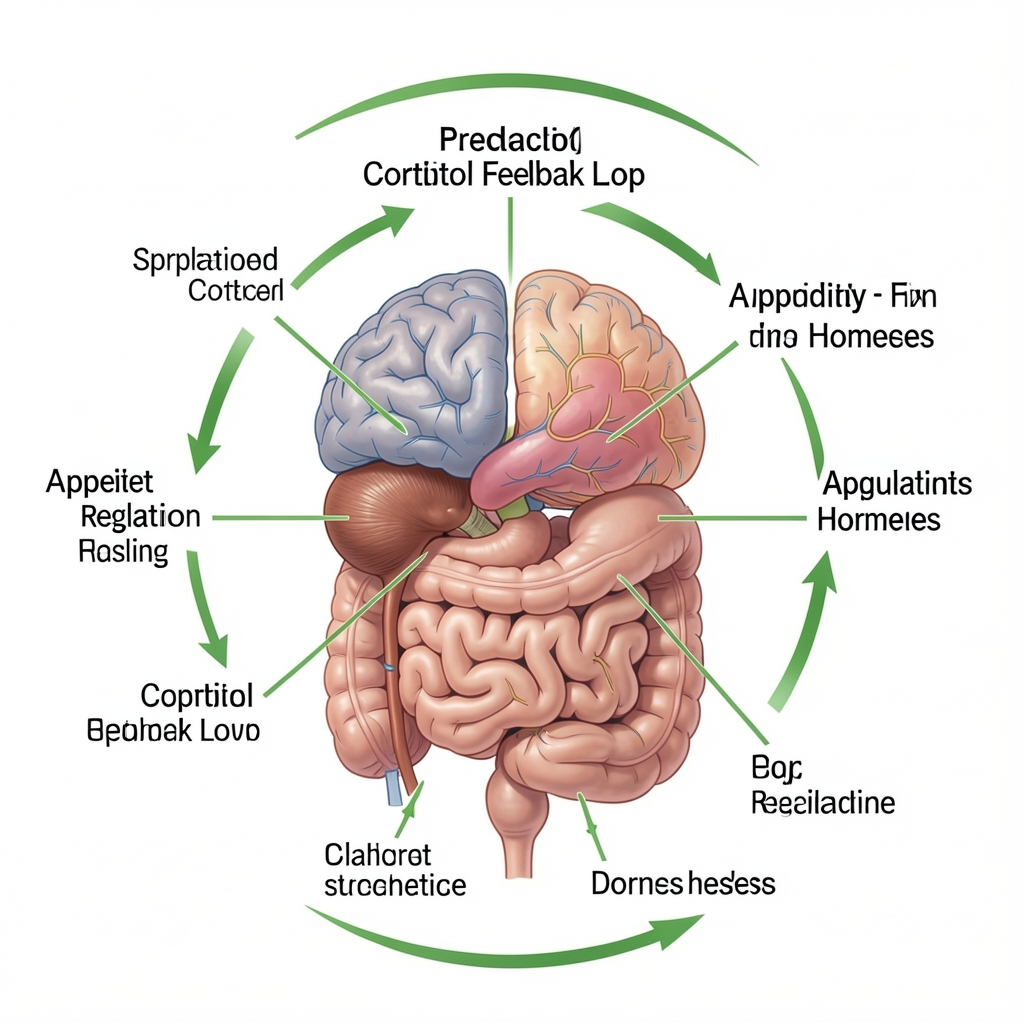
When cortisol concentrations remain elevated across extended periods, the appetite-regulating signals leptin and ghrelin shift measurably. The result is an increased preference for energy-dense foods — a well-documented stress-appetite feedback mechanism. Oralinev's intake assessment begins by mapping this metabolic context against the individual's dietary record.

Scientific diagram of cortisol feedback loop and appetite regulation hormones, clean white background with green annotations
Neurological Reward

Dopamine Pathways and Comfort Food Selection

High-palatability foods trigger dopamine release in ways that parallel other reward-seeking behaviours. Under stress, this pathway becomes more strongly activated — making the selection of comfort foods a neurologically reinforced response rather than a simple preference.

Documented Pattern — Revision 02-A
Emotional Hunger

Distinguishing Physical from Emotional Appetite Signals

A core competency in behavioural nutrition is the calibrated identification of hunger origin. Oralinev's intake protocols include standardised hunger-mapping questionnaires that differentiate physiological cues from stress-reactive impulses.

Mindful Eating

Attention-Based Eating Frameworks

Attention-based eating techniques represent one of the most evidence-informed approaches to breaking automatic food responses. Structured practice in this area forms the second module of every Oralinev programme.

Habit Architecture

Restructuring Food-Habit Loops Under Pressure

Habitual stress eating operates through cue-routine-reward loops. Identifying the specific cues — environmental, emotional, temporal — is the prerequisite for any structured programme of habit alteration. This forms the methodological foundation of Oralinev's intake assessment.

03 — The Pattern

Why Pressure and Appetite Are Biochemically Entangled

"The relationship between psychological load and food selection is not a failure of willpower. It is a documented physiological response — one that can be systematically understood and methodically redirected."

The stress response activates a cascade of biochemical and neurological changes. Cortisol, released by the adrenal glands during periods of sustained pressure, promotes the storage of abdominal fat and simultaneously increases cravings for high-calorie, high-fat, and high-sugar foods. This is not coincidental — it reflects the body's evolved priority for rapid energy availability.

Simultaneously, insulin sensitivity can be reduced under chronic stress conditions, creating a cycle in which food choices that feel rewarding in the short term contribute to longer-term metabolic imbalance. Understanding this cycle at a compositional level — which nutrients, which meal patterns, which behavioural cues — is the starting point of the Oralinev assessment process.

The field of behavioural nutrition provides validated tools for mapping these cycles. Oralinev applies these tools in structured programme sequences, with each client's data informing the precise calibration of their personal eating framework.

Overhead view of a nutritional journal with handwritten meal and mood annotations, pencil and ruler beside it on a linen surface
Client Intake Journal — Oralinev Assessment, 2024
09:00
Highest Cortisol Window
21:00
Peak Emotional Eating Risk
04 — Process Overview

A Systematic Approach to Appetite Pattern Analysis

01
Intake Assessment

Appetite Behaviour Mapping

A structured intake questionnaire establishes baseline eating behaviours, stress-eating frequency, emotional hunger signatures, and current food-environment data. Lot record: IA-2024.

02
Pattern Identification

Cue-Routine-Reward Analysis

Environmental, emotional, and temporal eating cues are identified and mapped. This analysis establishes which habits are most strongly reinforced and where intervention has the highest compositional yield.

03
Framework Delivery

Structured Habit Recalibration

A 12-week programme delivers module-by-module habit restructuring. Each week's framework is calibrated against the client's own pattern data, not a generic template. Documentation: revision 03-B.

Full methodology documentation available on request. Full Methodology
05 — Programmes

Structured Programmes for Every Pressure Context

Stress-Eating Audit

Intake Assessment — 2 sessions

A comprehensive assessment mapping the individual's stress-eating patterns, emotional hunger signatures, comfort-food preferences, and current food-environment. Delivered as a structured two-session intake followed by a written pattern report.

Programme Details →

Habit Restructuring Programme

12-week framework

A module-by-module programme targeting cue identification, routine substitution, and reward recalibration. Each module is calibrated against the client's intake data. Includes weekly check-in documentation and progress audit at week 6.

Programme Details →

Mindful Eating Foundation

6-week module

An attention-based eating module covering hunger signal calibration, sensory engagement during meals, and the distinction between physical and emotional appetite. Grounded in published mindfulness and nutritional research.

Programme Details →

Meal Planning Under Pressure

Practical framework — 4 sessions

A practical programme designed around real-world time and energy constraints. Covers batch preparation, nutritional triage for high-stress days, and the construction of a personal food-environment that reduces impulse decision-making.

Programme Details →
06 — Common Questions

Frequently Asked About Stress Eating

These questions reflect the most commonly submitted intake queries. Answers are drawn from the current evidence base in behavioural nutrition and food psychology.

A quiet desk workspace with a stack of open nutritional research papers, reading glasses, and a steaming cup of tea, warm natural light
Physical hunger develops gradually, responds to a range of foods, and is accompanied by physical signals such as an empty sensation in the stomach. Emotional hunger tends to arise rapidly, is focused on specific food categories — often high-calorie items — and is not resolved by satiety. Distinguishing these through structured observation is a core component of the Oralinev intake protocol.
Yes. Elevated cortisol correlates with an increased preference for foods high in fat, sugar, and refined carbohydrates. This is a documented neurobiological effect — not a psychological weakness. Understanding the compositional logic behind this shift is the first step toward redirecting it.
Published research on habit formation suggests a range of 8–24 weeks for consistent behavioural patterns to shift, depending on habit complexity and the frequency of cue exposure. The Oralinev 12-week programme is structured around this range, with mid-programme review at week 6.
Intuitive eating and structured meal planning address different levels of the appetite system. Intuitive eating cultivates attunement to internal signals; structured planning reduces decision fatigue in high-stress environments. Oralinev integrates both frameworks, sequencing them according to each individual's pattern data.
The Oralinev team holds qualifications in nutritional science and behavioural psychology from accredited UK institutions. All programme content is reviewed against current published literature annually, with documentation archived at revision level.
Yes. All programmes are available via structured remote provision using video sessions and a shared documentation portal. The intake questionnaire and pattern mapping are completed digitally prior to the first session.
Begin Your Assessment

Mapping Your Stress-Appetite Pattern Starts Here